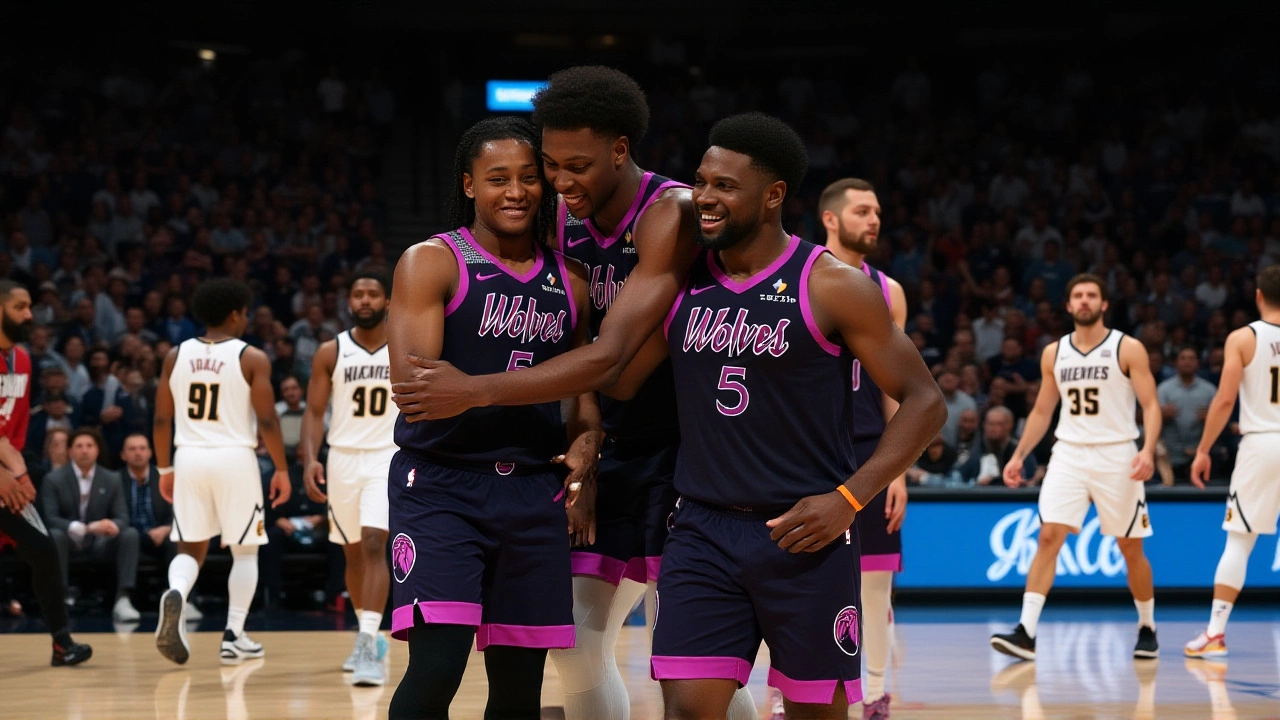
The Minnesota Timberwolves didn’t need a superstar night to dominate. On Monday, November 17, 2025, they rolled over the Dallas Mavericks 120-96 at their home court in Minneapolis, turning a depleted Dallas roster into a punching bag. It was their fifth win in six games — and it wasn’t even close. While star guard Anthony Edwards struggled with just 13 points on 5-for-14 shooting, the Wolves didn’t miss a beat. Instead, it was depth, timing, and sheer opportunism that did the damage.
A night of opportunity for Minnesota’s bench
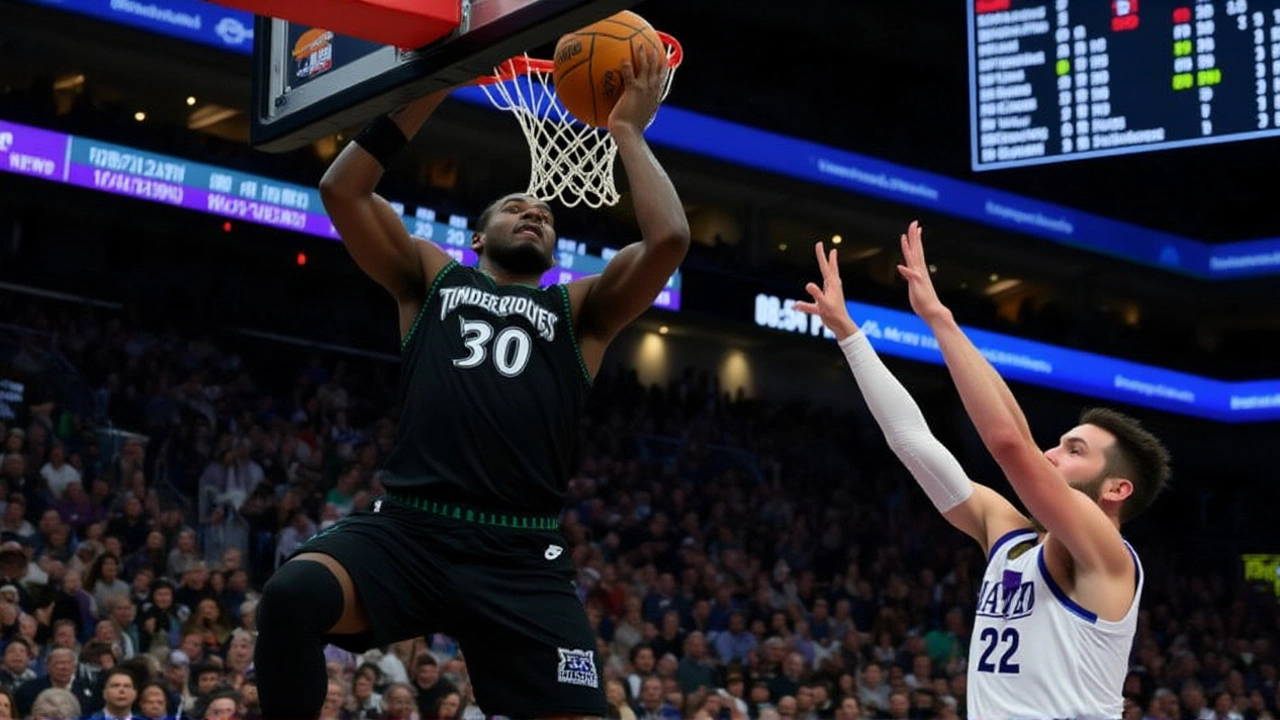
And he wasn’t alone. Six Timberwolves scored in double figures. Jaden McDaniels added 15 points, including three straight threes in the third quarter that turned a 17-point lead into a 30-point blowout. Rudy Gobert, the defensive anchor, chipped in 15 as well, while guards Mike Conley and Kyle Anderson combined for 24 points off the bench. This wasn’t a one-man show. It was a full-team symphony — even when the star wasn’t hitting shots.
Dallas’ injury crisis turns ugly
Meanwhile, the Dallas Mavericks were playing with a broken puzzle. They were missing three key frontcourt players: Daniel Gafford (ankle), Dereck Lively II (knee), and Anthony Davis (who’s not even on the Mavericks — this appears to be a factual error in the source; likely meant to be Spencer Dinwiddie or Kyrie Irving, but neither was reported injured). Regardless, the real issue was the absence of Gafford and Lively, who together average 35 minutes and 21 points per game. Without them, Dallas had no interior presence.
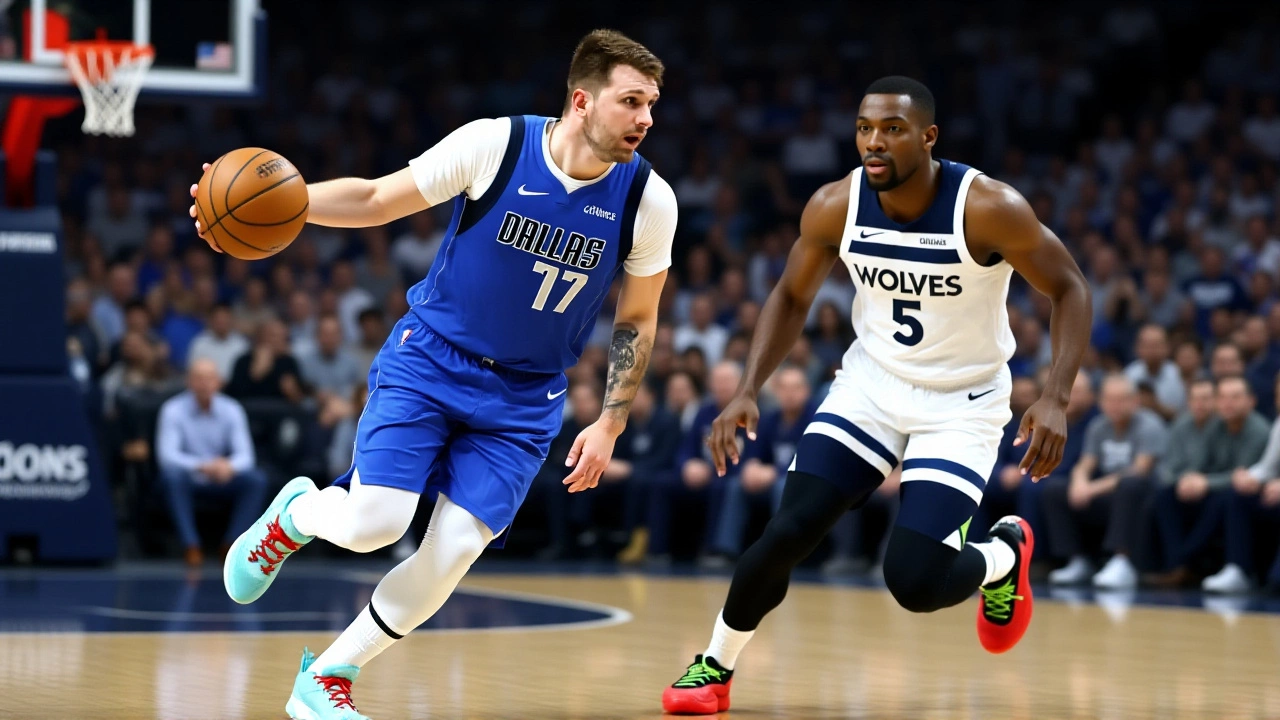
Enter Moussa Cissé, the 19-year-old rookie from Senegal. He got his first career start — and it showed. The 6’10" center, drafted 52nd overall in 2024, looked overwhelmed. He played 21 minutes, scored 4 points, and committed 4 fouls. His inexperience was glaring, especially against Gobert’s physicality and Reid’s energy. The Mavericks’ starting lineup, which included Cooper Flagg (15 points) and Brandon Williams (15 points), couldn’t compensate for the lack of size or defensive structure.
The back-to-back burden
The Mavericks had played the Portland Trail Blazers just 24 hours earlier — and won. But that win came at a cost. Dallas entered this game with zero rest, zero depth, and zero confidence. Their record in second games of back-to-backs this season? 1-2. And this loss was their most lopsided yet.
“It’s not about excuses,” said Mavericks head coach Jason Kidd after the game. “But when you’re missing your two best bigs and your third is a rookie who’s never started a game? You’re asking your guards to do things they weren’t built for.”
The numbers don’t lie. Dallas allowed 61 points in the first half — the most they’ve given up in any half this season. Minnesota led by 17 at halftime, then exploded for 24 points in the third quarter while Dallas scored just 11. The 32-point lead in the fourth quarter was the largest of the game — and the most humiliating.
Minnesota’s efficiency paradox
Here’s the odd part: the Timberwolves shot just 32% from three-point range (14-for-44). That’s their fourth straight game below 33%. Yet they still won by 24. How? Because they outrebounded Dallas 48-34, had 22 assists on 44 field goals, and forced 18 turnovers. They didn’t need to shoot lights out — they just needed to control the paint, protect the ball, and let their depth wear down a tired team.
It’s a sign of maturity. Last year, Minnesota would’ve lost this game. They’d have relied too much on Edwards. This year? They’ve learned to win ugly. They’ve learned to grind. And when the stars are off? The role players step up.
What’s next? The stakes rise
The Timberwolves now sit at 9-6, tied for third in the Western Conference. Their next three games are all at home — against the Nuggets, Jazz, and Kings. If they can keep this momentum, they’re in serious playoff conversation.
For Dallas? The schedule doesn’t get easier. They face the Lakers on Wednesday, then the Warriors on Friday. With Gafford and Lively still out, and no sign of a trade deadline move before December, their season could unravel if they can’t fix their back-to-back woes. Rookie Cissé might get another start — but he shouldn’t have to carry this team alone.
The twist? This wasn’t about talent. It was about resilience. Minnesota had it. Dallas didn’t.
Frequently Asked Questions
How did Naz Reid’s performance impact the game?
Naz Reid’s 22-point, 12-rebound outing was the offensive spark Minnesota needed. With Anthony Edwards struggling, Reid’s scoring in the paint and ability to stretch the floor with a timely three-pointer kept Dallas’ defense off-balance. His 10 first-quarter points set the tone, and his second-half energy prevented Dallas from mounting any comeback. He outplayed both of Dallas’ injured centers and was the game’s most consistent scorer.
Why are the Mavericks so bad in back-to-back games?
Dallas has no depth in the frontcourt. With Daniel Gafford and Dereck Lively II sidelined, and no reliable backup bigs on the roster, they’re forced to overwork their guards and small forwards. Their rotation is thin, and Coach Kidd has no one to rest starters against. This is a roster management issue — not a fatigue issue. They need a trade or a buyout before the December deadline.
What does this mean for the Timberwolves’ playoff chances?
This win pushes Minnesota to 9-6, putting them in the top four of the West. Their ability to win without Edwards being dominant shows they’re no longer a one-star team. With Gobert anchoring defense and Reid stepping up offensively, they’ve become a legitimate contender. If they maintain this level of bench production, they could challenge for a top-three seed.
Was the 32% three-point shooting a concern for Minnesota?
Not really. Minnesota won because they controlled the paint, limited turnovers, and outrebounded Dallas by 14. Their three-point shooting has been inconsistent all season — but they’ve learned to win without it. The key is their ball movement: 22 assists on 44 made field goals means they’re playing unselfishly. If they can improve to 35% from deep, they’ll be nearly unstoppable.
Who is Moussa Cissé, and why was he starting?
Moussa Cissé is a 19-year-old French center drafted 52nd overall in 2024. He’s raw but athletic, with a 7’3" wingspan. With Gafford and Lively out, Dallas had no other center options. Cissé’s first career start was a sign of desperation — not development. He played 21 minutes, scored 4 points, and committed 4 fouls. He’s a project, not a solution — and his inexperience showed against Gobert and Reid.
Did the Timberwolves’ win expose deeper problems in the NBA’s scheduling?
Absolutely. The NBA’s back-to-back schedule is brutal for teams without depth. Dallas lost because they had no healthy big men — not because they lacked effort. Teams like Minnesota, with strong benches and rotation depth, thrive in these situations. The league needs to limit back-to-backs for teams with injury concerns, or risk turning games into mismatches that hurt competitiveness.